Body Composition
Body composition refers to the relative amount of fat to other non-fat tissues or lean tissues like muscle, bones etc. An ideal composition would result in the individual being healthier and finding themselves, able to move more freely and efficiently. Achieving the Ideal body composition can go a long way in contributing to a person’s overall wellness.
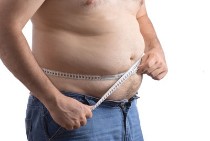
Body composition is divided into two separate types of mass: fat-free mass -- which is comprised of all of the body’s non-fat tissues -- and body fat. The Fat-free mass includes bone, water, muscle, and tissues. The Body fat is literally fat located within the body. Some fat is necessary for overall health; it helps protect internal organs, provides energy
and regulates hormones that perform various functions in body
regulation. Any amount of body fat beyond this limit is considered
excessive and mostly unhealthy.
Body fat includes essential fats, such as lipids, and nonessential body
fats; these fats make up around five percent of total body weight for
men, and up to 12 percent for women. Nonessential fat is found mainly
within fat cells and adipose tissue, below the skin and surrounding
major organs. The amount of nonessential fat stored in the body is
variable among individuals on factors such as age, gender, and diet.
Excess nonessential fat can normally be attributed to consuming more
food energy than what is burned through metabolic functions and
activity.

Body composition (particularly body fat percentage) can be measured in several ways. The most common method is by using a set of measurement calipers. This technique uses a pair of calipers to measure the thickness of subcutaneous fat in multiple places on the body like the abdominal area, the sub-scapular region, arms, buttocks and thighs. These measurements are then used to calculate the total body fat with a meager margin of error (approximately four percentage points).
Another method is bio-electrical impedance analysis (BIA). This method uses the resistance of electrical flow through the body to estimate body fat.
Buoyancy test: This technique for measuring body composition has been developed using the same principles as under water weighing. The technique uses air, as opposed to water and is scientifically known as air displacement plethysmography (ADP). Subjects enter a sealed chamber that measures their body volume through the displacement of air in the chamber. Body volume is combined with body weight (mass) in order to determine body density. The technique then estimates the percentage of body fat and lean body mass (LBM) through known equations (for the density of fat and fat free mass).
Buoyancy test: This technique for measuring body composition has been developed using the same principles as under water weighing. The technique uses air, as opposed to water and is scientifically known as air displacement plethysmography (ADP). Subjects enter a sealed chamber that measures their body volume through the displacement of air in the chamber. Body volume is combined with body weight (mass) in order to determine body density. The technique then estimates the percentage of body fat and lean body mass (LBM) through known equations (for the density of fat and fat free mass).
Loading
Home | About us | Articles | General | Training | Nutrition | Supplementation | Downloads | SF store | Forum | Contact SF | SF Site Map
